
How Wales is shaping the future
5th December 2025
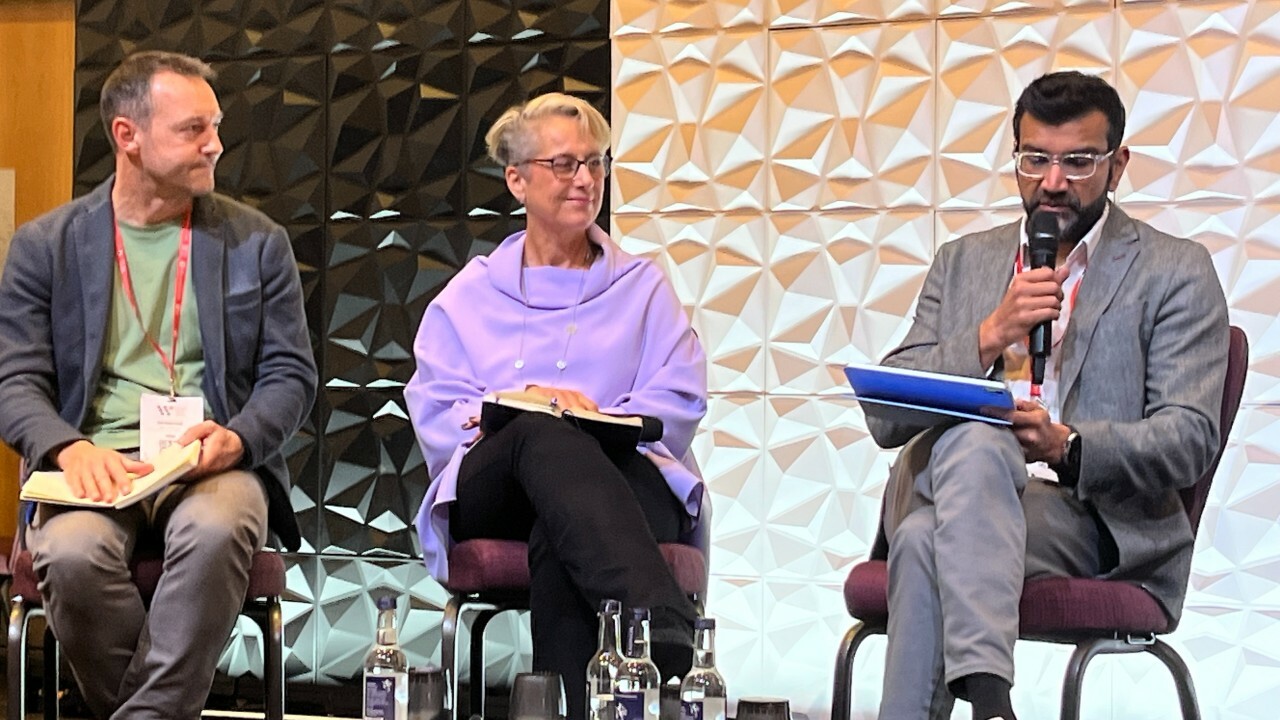
The second day of Wales Tech Week Technology Connected proved really enjoyable and underlined that Wales's strategic asset isn't just technology, it's the people, collaboration, and unified social purpose driving it. The discussions I attended on transport, renewable energy and quantum demonstrated a clear, coherent vision for a connected, resilient, and sustainable future. And they all had great crossovers with areas we film in. Here are some of my takeaways:
Transforming Transport and Mobility
This panel with Thomas Kinnear , Sally Fuller, and Sameer Savani discussed the vision laid out by the Welsh Government’s National Transportation Delivery Plan which focuses on improving access to jobs, family, and appointments by enabling mobility through public and active transport. A key takeaway was the commitment to create an integrated transport system, something only Transport for London currently achieves in the UK. Sally noted this ambition for a unified approach gives Wales an edge, making it a really attractive environment for companies like BT to operate and innovate in.
We heard about Station Innovation Zones, such as the multi-modal exchange at Bristol Temple Meads. This collaboration between Wales and Bristol allows smaller tech companies to demonstrate the impact of their solutions before scaling up, which is a crucial de-risking step. Smart infrastructure (familiar from our work with Bristol’s Smart Internet Lab) promotes development of innovative safety measures, such as an app that allows women to report when they feel unsafe. Sally told us how the transport sector could learn from apps like Vinted, where user-driven platforms can self-power wider social and environmental goals. Sameer cautioned that the UK often loses battles to scale up tech companies and keep them in the UK, citing Citymapper's journey app being acquired by a US platform; companies need more support and wrap-around services to progress through TRLs.


Offshore Wind and Emerging Technologies
The renewable energy panel, featuring David Gold Paul Ellsmore, Graham Foster Helen Donovan and Dai Lewis focused on the Celtic Sea and the immense opportunity of offshore wind, a sector with a 40,000 strong workforce, 9,000 of them in Wales, and set to skyrocket.
We learnt how the move from near-shore to deep offshore presents massive technological challenges that demand innovation e.g. dynamic cable solutions and the need for larger, more efficient turbines with repeatable builds to achieve economic scale. We also need digital twins and AI-driven environmental services to manage the vast amounts of data and reduce risk, which immediately made me think of the work we do with the Reality Emulator Bristol Digital Futures Institute, and the processing power of Isambard-AI with Bristol Centre for Supercomputing (BriCS). David noted that AI has the potential to reject 99% of irrelevant data, leaving only the insights needed. Automation and Robotics will be another priority for development in order to mitigate the harsh conditions for humans, not dissimilar to some of the challenges the Hot Robotics team we work with have to crack. Crucially, Graham explained that traditional, fixed structures become prohibitively expensive beyond 60 metres. This is driving novel deep-water innovation in test areas like the Milford Haven. Having filmed large marker buoy maintenance out at sea for Trinity House, I’m in awe of just how robust any maintenance system would have to be!

Understanding Quantum
Anke Lohmann did a great job of chairing this session which probably had the most challenging title to live up to. The panel featured Zoe Davidson Anthony Bennett, Iwan Davies and Paul Ceely. Anthony provided a much-needed grounding in the reality of quantum technology. The primary takeaway was that while the science has been around since 1925, areas of practical utility have only been realised in the last 25 years. We need to focus on applications such as quantum security, self-healing networks and solving problems like the ‘travelling salesman’ (the most efficient ways to navigate networks) rather than getting caught up in too much hype in the popular press around quantum computing, in which some fantastic work is being done, but it’s a long way off being programmable or useful. The panel raised concerns about miscommunication where it isn’t always clear what type of quantum research we’re talking about and how hard the deep tech problems are to solve.
It was good to hear quantum sensing and timing mentioned, an area where we’ve made explainer and outreach films with the University of Birmingham's UK Quantum Technology Hub Sensors and Timing, touching on real life applications such as brain imaging at The Centre for Human Brain Health (CHBH) and gravity mapping. These are great examples of the types of stories (fintech forecasting and fraud detection are other promising candidates) that connect quantum's power to daily life and industry, making them much more tangible for a general audience.